How to Balance Work, Rest and Personal Time
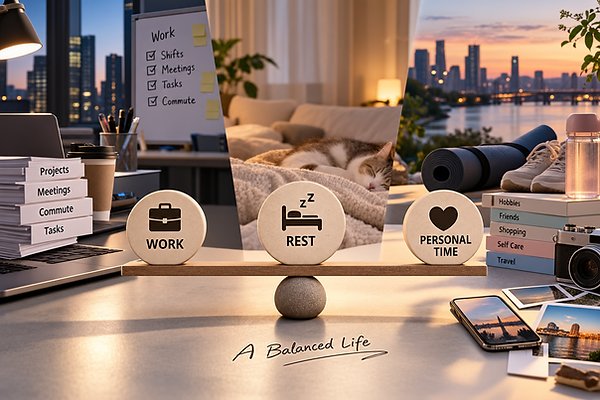
A busy schedule does not always mean a productive schedule.
When work, errands, study, social plans, and personal responsibilities all compete for the same hours, the first thing that often disappears is rest.
The goal is not to create a perfectly balanced day. It is to build a week that gives enough space for work without making everything else feel rushed.
Start With What Cannot Move
Some parts of your week are fixed.
These may include classes, appointments, family responsibilities, or another job.
Mark those first.
Once the non-negotiable parts are visible, it becomes easier to see where work can realistically fit.
Treat Rest as Part of the Schedule
Rest should not be whatever time is left over.
If you only rest after everything else is finished, there may never be enough time.
Instead, protect specific periods where you do not schedule work or major responsibilities.
Even a small amount of planned recovery can make a busy week feel more manageable.
Leave Space Between Commitments
Back-to-back plans can make a day look efficient, but they also remove flexibility.
Travel delays, unexpected tasks, or simply needing more time can quickly create stress.
Try to leave some buffer time between work and other commitments whenever possible.
Protect One Personal Habit
Choose one activity that helps you feel normal during a busy week.
It could be exercise, dinner at home, reading, a walk, or meeting a friend.
Keeping one familiar habit can stop work from taking over the entire routine.
Watch for Warning Signs
A schedule may need adjusting if you are constantly cancelling plans, skipping meals, sleeping less, or feeling tired before the week is even half over.
Those signs do not always mean you need to stop working.
Sometimes reducing one shift or moving one commitment is enough.
Plan by Week, Not by Day
One difficult day does not always mean the schedule is bad.
Look at the whole week.
A busy Tuesday may be fine if Wednesday is lighter. A late Friday shift may work well if Saturday morning is free.
Balance is easier to see across several days than within a single day.
Do Not Use Every Free Hour
Free time is useful because it gives you room to react.
If every open hour is filled, even a small change can disrupt the entire week.
Leaving some unplanned time can make the rest of your schedule more stable.
Build a Week You Can Repeat
The best routine is not the one that looks busiest.
It is the one you can repeat without constantly feeling behind.
Work, rest, and personal time do not need equal hours, but each of them needs enough space to remain sustainable.